Tropical High-Rise Typologies
Marina Bay towers combine deep overhangs, high-performance glazing and sky gardens mandated or encouraged by planning guidelines. Double-skin facades appear on premium office stock to reduce solar gain while preserving floor-to-ceiling views.
Podium levels frequently integrate shaded arcades and MRT connections — acknowledging that pedestrian comfort at grade matters as much as rooftop prestige in equatorial cities.
Cultural Buildings as Civic Signifiers
The Esplanade — Theatres on the Bay employs a doubly curved aluminium sunshade grid filtering daylight to foyers and concert halls. Its biomorphic nickname reflects how non-orthogonal forms signal cultural distinction within a rectilinear financial district.
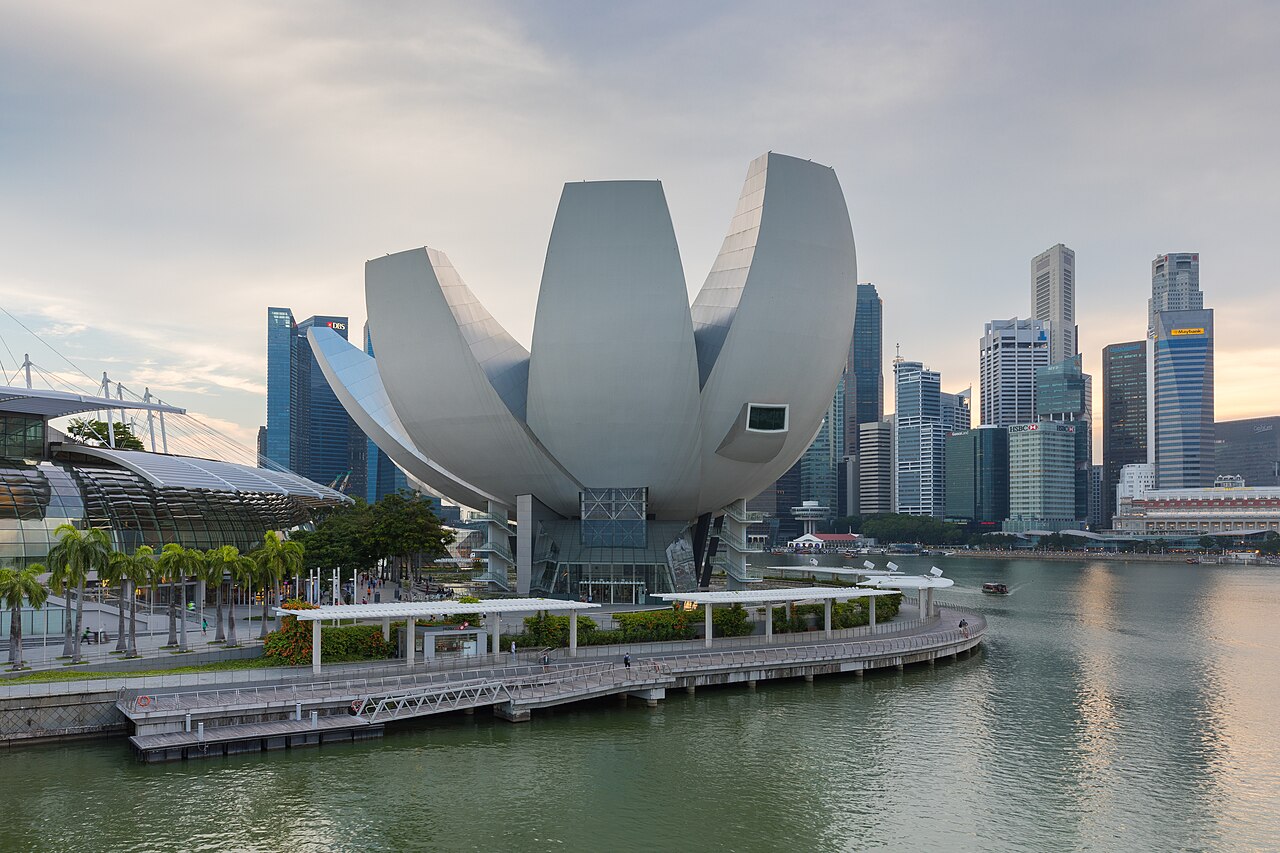
ArtScience Museum's lotus-inspired dish form cantilevers over the promenade, housing flexible exhibition volumes and reinforcing Marina Bay's museum cluster alongside Asian Civilisations Museum across the water.
Materials, Climate and Maintenance
Marine humidity and intense UV exposure accelerate façade soiling and sealant fatigue. Specifiers favour corrosion-resistant alloys, stone with low porosity and maintainable coating systems accessible via building maintenance units.
Landscape architecture uses native and adapted species tolerant of coastal wind and salt spray — a strategy visible along Bay South promenades linking major buildings.
Prominent Marina Bay parcels undergo design review panels evaluating massing, public realm contribution and façade permanence before planning approval.
Regional Influence Beyond Singapore
Architects trained or practising in Singapore export tropical high-rise lessons to Jakarta, Ho Chi Minh City and Manila — cities facing similar heat, humidity and flood risk. Marina Bay tours feature in university studios across ASEAN as a concentrated case study.
Sustainability Certification
Green Mark and LEED certifications appear on newer towers, documenting energy modelling, rainwater harvesting and construction waste diversion — metrics increasingly expected by multinational tenants.
Public Space as Architectural Glue
Helix Bridge, Event Plaza and waterfront steps stitch independent developments into a continuous public circuit. Architecture here succeeds when ground-level permeability invites movement between landmarks without security barriers breaking the promenade.
- Esplanade — cultural performance and sunshade innovation
- ArtScience Museum — exhibition architecture as sculpture
- Office towers — high-performance tropical glazing
- Promenade network — pedestrian connectivity along the bay